
_edited_edited_edited_.png)

%20(2)_edited.jpg)


.png)
.png)
_edited.png)


_edited.png)


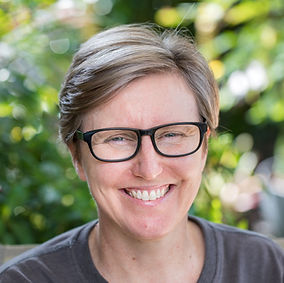
AURIEL
Artist, Mystic, Polymath, Autodidact
" Being autistic can often be likened to seeing a duck in water: On the surface we may seem like everything is fine, but beneath the water our legs are paddling like hell to stay afloat. "
AURIEL
Up-And-Coming Gallery Artist and Published Writer
My life before my diagnosis was vastly different from the one I’m stepping into now. I spent most of my life trying to figure out what was wrong with me. But in hindsight, that search led to a level of self-awareness I might not have developed had I been diagnosed sooner.
That doesn’t erase the heartbreak I’m still processing—all the "what-ifs" of had I been noticed earlier, or the support and leeway that I never received, and how it all compounded to erode my inner and outer compass. I was always chasing a carrot for an explanation as to why so many of my efforts seemed in vain: It felt like I was somehow ahead of the curve and way behind all at the same time.
I was bullied from grade school through high school, often by people I thought were my friends. My inability to distinguish between the genuine and the disingenuous has been one of the hardest lessons of my life. No one around me had answers—not ones that brought any comfort or made things better. That’s not to say I haven’t had moments of joy or unique and wonderful experiences; however, the damage from being misunderstood and misdiagnosed will take years to process and refine better ways of coping with the disconnect.
Aside from bullying and an unstable family life, I was often lonely, sensitive, and frustrated. Burnouts and meltdowns were common, though at the time, they were labeled as laziness, stubbornness, or childish tantrums. The stress took a toll on my health—frequent colds, allergies, migraines, digestive issues, rare illnesses (Ramsay Hunt Syndrome, autoimmune blisters), on top of hypothyroidism and obesity. I was sick often and missed a lot of school with panic attacks and slight agoraphobia. This upset my parents, and even my teachers mocked me, using me as an example of what not to be.
Academically, I excelled in English, art, and any science related to space. In sixth grade, I was selected to assist in creating a model of the Stardust satellite to be displayed at JPL. Math was always a struggle, and subjects that didn't hold my interest were difficult for me to focus on. I would also later be diagnosed with ADHD years after my Autism diagnosis. At the time, however, many of my needs and behaviors were a direct reflection of something intangible. I did not have the words or the ability to convey something that felt so pervasive yet defied any reasoning I could conceive, let alone know how to advocate for.
Socially, I was either too shy or too loud. I was hypersensitive to light, especially sunlight, and easily startled by unexpected noises or crowds of overlapping talk (noise). To make it more complicated, I never knew when to speak or when to be quiet. I struggled with picking up where I left off in conversations or tasks without the need to repeat myself or "resetting".
Those I grew up with and met often joked that I would "trip on air" and had a habit of walking away from me or falling asleep when I talked for too long without noticing a healthy reciprocal interest. From how my mind worked to how my body responded, I am certain I was a handful!
A pattern emerged that would later be described as a “spiky profile” on the spectrum, but at the time, it was dismissed as a sign of laziness. I would make the dean’s list in college, then end up on academic probation. I’d get a job, only to quit or be let go within weeks or months due to misunderstandings, office politics, or sensory and social overload.
Because I couldn’t fit into traditional systems or meet societal expectations, I was never able to become fully self-sufficient in conventional ways. I still struggle with this. I’ve had to rely on family or partners, even in unsafe situations, because I had no other choice. Having to fight feelings of failure and guilt for burdening others has been a near-constant stressor as well as motivator for paving a better way.
The fact that the unemployment statistics for the neurodivergent population are so high, riddled with co-occurring anxiety disorders, and often trauma, all highlight a failure of societal systems as much as a lack of care to include space for others to live in a world where the basics of Maslow's Hierarchy of Needs remain a distant pipe dream for so many.
Desperate for help, for years I sought out counselors, psychiatrists, self-help books, videos, and practices. But I was so overwhelmed and dysregulated that nothing seemed to help me be stable. My experiences left me traumatized, and I frustrated everyone around me as much as I frustrated myself. When I was diagnosed with Bipolar II or as a "quiet borderline," even the professionals admitted I didn’t quite fit the criteria. They needed a label to prescribe medication, so they did. Antidepressants and anti-anxiety pills only made things worse.
At 22, I gave in more than I gave up. I decided that if I couldn’t fit in, I would work with what I was actually good at. I embraced my special interests as a lifeline because, at that point, I wasn’t sure how to keep going. It wasn’t that I wanted to die—I didn’t know how to live in this world. Something I have heard before and was also experiencing. It was as if I were dissociating from being a functional human- I was cosplaying one.
I prioritized the only things that connected me to others and myself: art, writing, and spirituality. They gave me peace and something to hold onto. Eventually, I sold what I had of value and went on an art retreat, hoping to meet people, showcase my skills, and possibly catch a break.
After I returned, one of the retreat hosts called and asked, "Have you ever been tested for autism?" It had never occurred to me. I didn’t fit the stereotype of what I was told an autistic person looked like. But I had nothing left to lose, so I researched like mad. And everything fit. I did catch that break, but it was not what I went there for; however, it was actually worth more.
I printed out pages of information, took online tests (scoring high on all of them), and fought to find a place that specialized in diagnosing adult women through my government insurance. A few months later, a spot opened up—seven hours away. I went through the evaluation process (months), and at the end, it was confirmed: I was autistic.
The doctor said I was missed because I was very bright, self-aware, and had been traumatized. Along with autism, I was diagnosed with an anxiety disorder and PTSD, then years later (as mentioned prior), ADHD.
For the first time in my life, I had real answers. A new way to frame everything I had been through and a big part of the kaleidoscope that was me and my life. It was not something to fix, but to grow into.
Since then, I’ve started experiencing a slow but steady incline, such as having my art in gallery shows from LA to even overseas. The shame and self-blame have lessened, but the "what-ifs" remain. Still, I finally understand my quirks. I’ve given myself permission to self-soothe, drop the masks, and reclaim the child I used to be before the world wore me down.
I get a do-over—not everyone can say that.
My Story
My Favourite Autism Characteristic
Pattern recognition is my favorite characteristic, as I have found it the best tool for differentiating reality from assumptions, fleeting intentions from committed actions, and capabilities from limitations. Patterns are my serenity prayer.
AURIEL
View her body of work at:


